
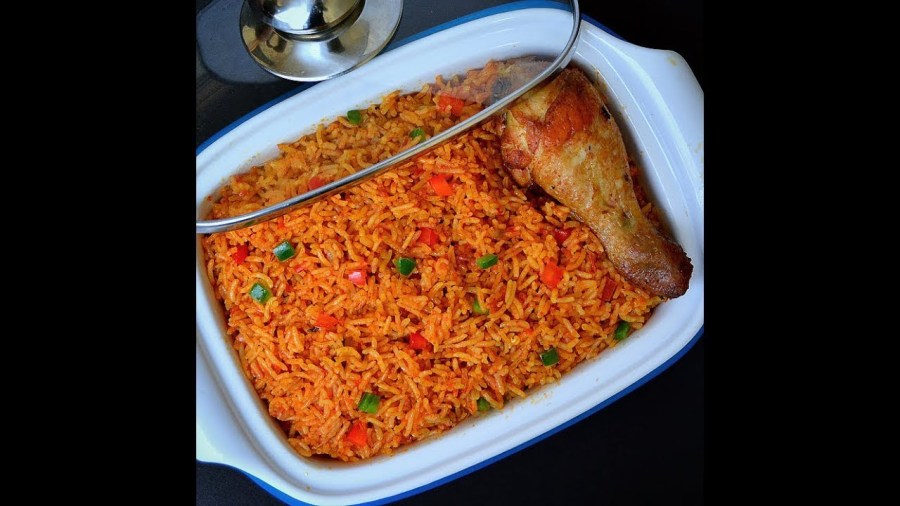
So, Jollof rice. Where do I start, with Jollof rice? In the average Nigerian’s lifetime, Jollof rice would have been eaten in thousands of portions. Whatever number you can think of in your head, if you happen to live in Nigeria, double that number. Would you believe that Jollof rice did not originally come from Nigeria? No, it didn’t. Jollof rice actually has its origins in Senegal, from the Wolof ethnic group and it spread across West Africa. So, shout out to the people of the Senegambia region for giving us this dish.
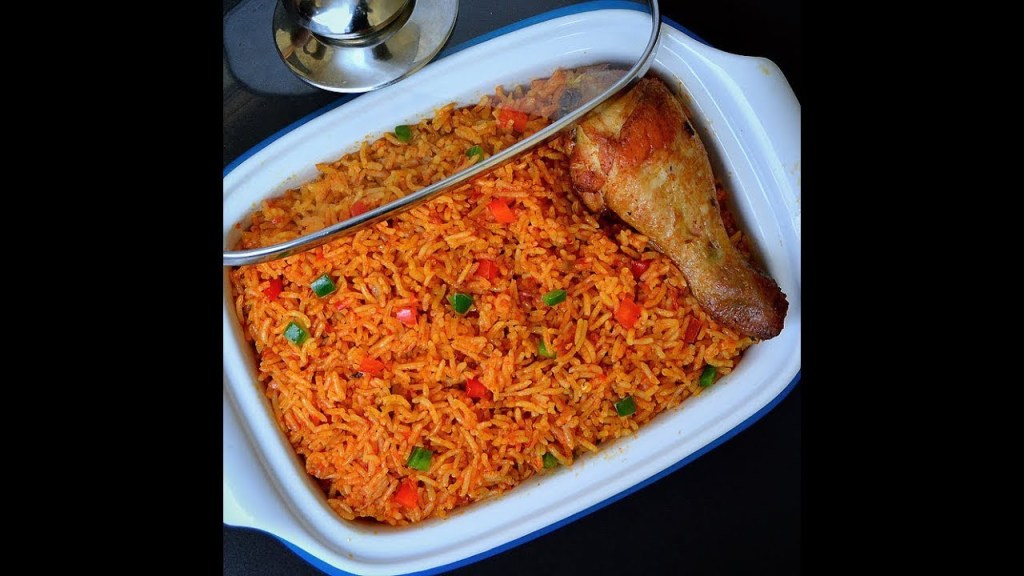
now, we have Jollof rice, then we have Party Jollof rice. Make no mistake, those two are not the same thing and their meaning can be transcribed from their tags. Party Jollof rice tends to be much more delicious with the added Smokey burnt flavour. Fried rice (another party favourite) is usually not on par with Jollof rice, so when I attend parties I ask for only Jollof rice because I am sure of what I will get. That orange coloured rice cooked in a delicious tangy tomato sauce. I can smell Jollof rice cooking from a mile away, because its aroma is very distinct and oh so yummy. I have seen soooooooo many recipes for Jollof rice, some have updated my knowledge and some have made me downright mad. I saw a recipe on BBC Good Food and it included okra. You must be kidding me, I said to myself. Okro in Jollof rice? Who wrote that? On a BBC site for that matter. With the teeming population of West Africans in the UK, no one could be found to write an authentic recipe for Jollof rice. I have also seen recipes using leafy greens, cabbage, carrots, green beans, all sorts. Sacrilege in my personal opinion. Jollof rice is a legend, an establishment of its own, you don’t need to mess with it. Lol…
Ingredients
- Long grain rice
- Tomatoes
- Red Onions
- Tatashe (red bell pepper)
- Ata Rodo – scotch bonnet/habanero pepper
- Tomato Paste
- Olive oil
- Curry Powder
- Dried Thyme
- Salt
- Seasoning cube
- Beef Stock
- Ginger
- White Pepper
How to
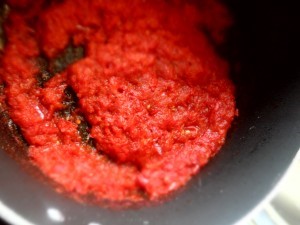
1. Blend the tomatoes, onions, tatashe (red bell pepper) and ata rodo (scotch bonnet/habanero pepper) to a smooth paste. Heat it in a pot to reduce the volume till you see small dots (bubbles) in the pepper. It is very important to achieve this, to boil out the water content.
2. Pre-boil the rice first. Remember I wrote above that the rice is combined with a fried tomato sauce. To do this, you have to pre-boil the rice to start the cooking process. To pre-boil the rice, pour the rice unwashed into a pot with a lot of water. Tip: I will explain later why unwashed. Let the rice come to a boil till you can see the creamy starch floating on top of the water and the rice has now the white colour of boiled rice. Taste the rice and make sure it is al dente before taking it off the heat. Al dente is Italian for cooked to be firm but not hard. Be careful now, any more cooking and you will make baby food Jollof rice and not Party Jollof rice.
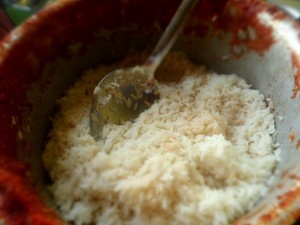
3. Once the rice is al dente, pour out all the water and then proceed to wash the rice. By washing the rice at this point with cold water you are stopping the cooking process. Many times I watched the women hired to cook for the party do this and I didn’t understand why. I found out the reason why when I got older and I watched a cooking show, on how to blanch tomatoes. This is a very common process with cooking vegetables, especially green veggies such as asparagus, runner beans and even corn. As they are larger food items, you pour into a bowl filled with ice cubes but with rice, simply decant the hot water into the sink and open the tap to maximum flooding the pot with cold water to stop the cooking process so the rice retains its al denteness (pardon my French, lol).
4. While the rice is pre-cooking, fry the tomato sauce with 4 – 5 cooking spoons of olive oil. You need this much to fry the pepper properly. To fry the tomato sauce chop at least 1 red onion, (2 if you are making a large quantity of jollof rice) and fry lightly in your choice of oil. Once the onions are translucent add the reduced pepper from step 1. Tip: If you have boiled the pepper properly, the frying process will start immediately. If not the pepper will boil instead and prolong the cooking time. Add curry powder and dried thyme in tablespoon increments, and taste every few minutes. Let your taste buds and personal preference decide if you want to add more. Be careful though you don’t want the spices to overpower the sauce.
5. At the beginning the oil will combine well with the pepper. You will know it has fried when the oil floats to the top and the colour has changed from golden to deep orange. Now add the tomato paste. Tip: You don’t want to add the tomato paste at the beginning because it will thicken the reduced pepper and burn. Add the tomato paste – lots of it (a ratio of 60% mixed pepper – 40% tomato paste) and add beef stock.
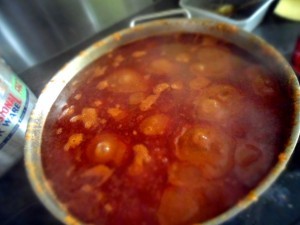
Tip: The stock is to help thin out the paste to reduce the chance of burning and to also provide salt and seasoning. If you add the paste straight from the can it will definitely burn.
6. Let the tomato paste fry with the pepper till it thickens and small bubbles form in the pepper which gives it a curdled look. Taste for salt and seasoning. If it needs more, add more. Now it is time to add the pre-cooked rice to the pot followed by more beef stock and then stir.
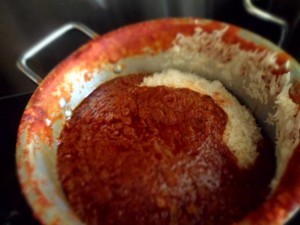
Tip: Old wives tale alert – the hired party cooks say stir with a wooden spoon and not a metal spoon to prevent the rice from clumping. How true this is, I don’t know but erm, I do it. Lol. Keep adding the stock till it just slightly covers the rice. Cover the pot midway and watch the rice closely. Once it has absorbed the stock, tear the seams of a supermarket plastic bag to make it flat or use a large piece of foil paper, place on top of the rice and seal the edges where the plastic bag/foil touches the pot. it is important that you seal the edges so no steam escapes. Then you cover the pot properly.
 foodhouse.food.blog